
 EN
EN
 CH
CH FR
FR ES
ES AR
AR FA
FA AZ
AZ JA
JA KO
KO TL
TL ID
ID VI
VI TH
TH TR
TR BN
BN LO
LO MN
MN MY
MY KK
KK UZ
UZ KY
KY DE
DE IT
IT PT
PT RU
RU BG
BG HR
HR CS
CS DA
DA NL
NL PL
PL CA
CA SR
SR SQ
SQ HU
HU GA
GA CY
CY IS
IS EU
EU LA
LA
The Playback Controller is the Operational Heart of Digital Signage Networks
Playback controllers are more than just advanced media players. Digital signage networks are built on the principle of focused central intelligence and playback controllers offer management on a different level than isolated players for controlling playback across a wide and diverse range of endpoints, which is especially necessary for maintaining playback synchronization on a mass scale.
The Real-World Network Scale and Concurrency Problems Standalone Media Players Encounter
Conventional media players are, together, a critical point of failure for any digital signage deployment. They present three key issues.
Network congestion. Standalone players are notoriously latency-spiking devices, and deploying more than 50 units can increase latency by 200–400ms during peak content updates.
Concurrency Limitation. Synchronization of video walls across locations is impossible, and performing this task with more than 15-20 screens within a single network segment is likely to result in failure.
Frame instability. Independent clocking is known to cause 15% frame loss during multi-zone playback (Digital Signage Federation, 2023).
The lack of a necessary architectural hierarchy exposes these devices to cascading failures when scaling beyond a covet level of deployment, and this is especially true for enterprise level deployments.
The hardware-software co-design approach guarantees playback and uptime and makes seamless scalability a reality.
Today's playback controllers incorporate three key innovations.
First are the Real-Time Monitoring Cores, which monitor each screen's buffer and sync conditions.
Next, Predictive Throttling adjusts incoming bitrate in anticipation of bandwidth changes.
Last is API-Driven Provisioning, which allows the system to provision resources automatically, as opposed to requiring a manual, node-by-node setup.
This integrated approach results in a 67% reduction in unplanned downtime and enables linear scaling (adding 100 screens requires no architectural changes). Leading providers achieve 99.95% playback reliability in 1,000+ screen networks by regarding the controller as the network's operational core, not a peripheral.
Intelligent Control Optimizes Playback Performance with Greater Scalability and Predictability
The shift in the industry to real-time monitored playback controllers
With the advancement in digital signage, the rigid plug-and-play media boxes are no longer sufficient to meet companies' needs for more sophisticated control in large network management. Standalone devices can cause frustrating network lag and cause content to go out of sync across displays, disrupting consistent campaign messaging. New playback controllers have integrated real-time monitoring hardware to address these concerns. The most advanced systems can monitor rendering times, analyze and maintain healthy buffer statuses, adjust to timing differentials between displays, and deliver content with real-time preemptive adjustments to resolve issues within the viewing experience. Automated alerts to address lags of more than 50 milliseconds are especially important. The 2023 Digital Signage Federation report shows approximately 65% of users of basic media players reproduce content inconsistently at multiple locations. Upgrading systems is essential for organizations of all types, and these are compelling reasons for investing in advanced playback controllers.
Skyworth Media Players state adaptive bitrate buffering + dual-core 4K decoding for 92% fewer frame drops than other standard digital signage media players.
Predictable performance differentiates media players from standard playback controllers. 4K dual-core decoding allows intelligent execution of other applications, with performance boosts, alongside powerful development. Unfortunately, single-core media players suffer from performance drops due to high workload applications. Adaptive bitrate buffering creates stability with 60 network checks for adaptive content retrieval to match bandwidth. Recent testing has shown a 92% improvement versus legacy digital signage in systems with over 200 endpoints, proving modern systems outperform legacy technology. Standard media players on busy roadways experience an 18/hour frame drop, while intelligent controllers experience zero in 4 unreliable satellite links. In railway and emergency alert digital signage, reliable performance is essential.
Enterprise-Grade Hardware with Unified CMS Integration
The hidden TCO trap: CMS integrates at the firmware level increases deployment costs by 37%
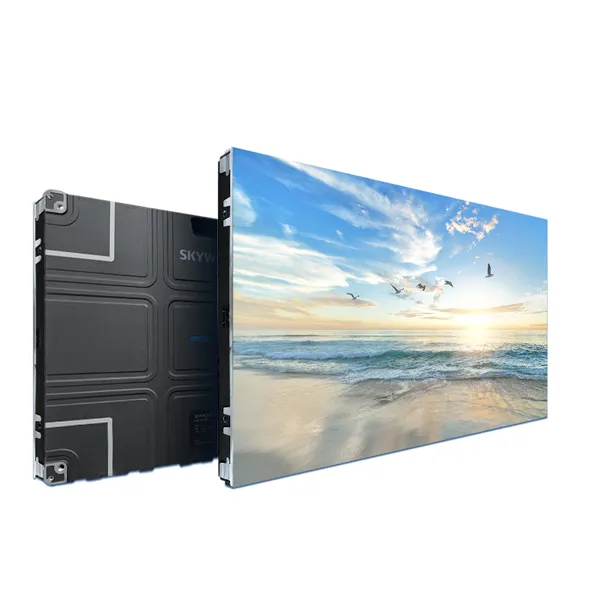
Simply high-performance hardware creates tech fragmentation issues. Without proper CMS integration at the firmware level, organizations face repetitive configurations, manual content synchronization, and uneven security patch updates on their system. Last year, the Digital Signage Federation said operational issues and headaches raised total cost of ownership by 37%. Real savings come when the hardware is integrated with CMS from day one. This removes the need for additional software and allows businesses to automate management of devices without ongoing manual control.
One click provisioning with unified API layer across NoviSign, Scala and Yodeck
Modern playback controllers standardize API layers to solve CMS fragmentation. Skyworth architecture allows single-command deployment across all 3 environments (NoviSign, Scala, and Yodeck). This unified strategy decreases provisioning time from hours to minutes and provides:
- Automatic certificate-based authentication
- Centralized firmware/OS updates
- Cross-platform remote diagnostics
With this integration, you don’t have to rely on a vendor as it maintains predictability of playback at scale.
Changing the Digital Signage Media Player to Playback Controller
There is now a growing shift from the old standalone media players to the smart playback controllers. Traditional media players were just dormant boxes that did playback. They have now changed to playback controllers that perform a myriad of functions. They have become central hubs on the networks. They have the ability to monitor the delivery of content on multiple endpoints. They make automatic adjustments on the fly when a delivery is needed to ensure that the delivery is not interrupted. This also means that the playback controller is not just a box that is playing content. Rather, it is an active device that is playing content and optimizing the playback. They manage the bandwidth, issue firmware updates, and make the switches when things go wrong. When companies invest in real-time diagnostics built into controllers, they invest in the ability to prevent the unmanaged old school system breakdowns. The new era controllers have been shown to decrease the duration of unmanaged breakdowns by approximately two-thirds in studies done in 2024.
Ultimately, companies achieve consistent results across all locations, despite differing internet connectivity.
FAQ
What does a playback controller do in a digital signage network?
In digital signage networks, a playback controller organizes and schedules the content and ensures that all screens operate in sync across all levels.
Why do standalone media players not work in a large network deployment?
In large network configurations, standalone media players encounter network congestion, limited concurrency, lost frames, and delays that inhibit performance.
In what ways do modern playback controllers increase scalability and performance?
These systems use real-time monitoring, predictive throttling, and API-based provisioning to improve uptime, reliability, and scalability with little to no new architecture.
What advantages does the playback controller get from CMS integration?
Well-designed CMS integration minimizes the fragmentation of operations, automates the management of devices, and simplifies the cost of ownership by eliminating the need for additional software layers.