
 EN
EN
 CH
CH FR
FR ES
ES AR
AR FA
FA AZ
AZ JA
JA KO
KO TL
TL ID
ID VI
VI TH
TH TR
TR BN
BN LO
LO MN
MN MY
MY KK
KK UZ
UZ KY
KY DE
DE IT
IT PT
PT RU
RU BG
BG HR
HR CS
CS DA
DA NL
NL PL
PL CA
CA SR
SR SQ
SQ HU
HU GA
GA CY
CY IS
IS EU
EU LA
LA
COB LED Technology: Structural Advantages for Low-Light Performance
Chip on board technology bonds light-emitting diode chips directly onto a single substrate, forming a monolithic light-emitting surface. Unlike traditional surface-mounted device displays, where discrete pixels create physical gaps, chip on board technology eliminates inter-pixel spacing entirely. In low-light conditions, those gaps would scatter ambient light, producing halos and degrading perceived sharpness. By integrating emitters into a continuous array, this architecture delivers a uniform, pixel-free appearance where light emerges evenly without hotspots or dark grid lines. This structural continuity preserves fine detail even at close viewing distances and suppresses internal reflections that could wash out subtle tonal gradations, which is critical when ambient photons are scarce.
The deep black levels of chip on board technology arise from two integrated design choices: a matte black printed circuit board substrate and a continuous, optically flat encapsulation layer covering the entire pixel array. With no exposed solder joints, gaps, or reflective surfaces between emitters, the display presents a truly uniform black field when inactive. This seamless architecture prevents light leakage and minimizes stray reflections, yielding native contrast far exceeding pixel-separated technologies. In dim environments, the background recedes convincingly to black, enhancing highlight intensity and enabling distraction-free immersion. The encapsulation also ensures long-term black-level consistency across the screen, maintaining visual fidelity even in near-darkness.
Measurable Visual Improvements: Contrast, Color Uniformity, and Brightness Control
Chip on board structural advantages directly enable exceptional contrast in low ambient light. By eliminating inter-pixel gaps, it prevents cross-illumination and light leakage, which are key limitations of surface-mounted device designs. In controlled testing at 30 lux, a representative chip on board display achieved a static contrast ratio of 127,000 to 1, compared to just 4,500 to 1 for an equivalent traditional panel. This tenfold gain stems from true black reproduction, as the matte black substrate absorbs stray light while the uniform encapsulation layer suppresses internal reflections. Even below 50 lux, contrast remains above 100,000 to 1, preserving shadow detail without blooming or haloing. Such performance is essential in broadcast studios, control rooms, and home theaters, where accurate low-light rendering defines visual authority.
Furthermore, chip on board maintenance of color accuracy at low brightness relies on direct chip-to-substrate optical bonding and a precisely calibrated phosphor coating, eliminating micro-lens variability that causes off-axis color shift in conventional panels. In benchmark testing conducted by display metrology experts, a chip on board display registered a minimal color shift across a 160-degree horizontal viewing angle at 80 candelas per square meter, significantly outperforming typical surface-mounted device panels under the same conditions. This stability ensures neutral whites and saturated primaries remain consistent during nighttime operation. Combined with high brightness uniformity exceeding 95 percent, this technology delivers visually cohesive, fatigue-resistant imagery in dim settings.
| Performance Evaluation Feature | Conventional Surface-Mounted Device Display | Matte Black Chip on Board Display |
| Surface Light Interaction | Reflects incident light like a mirror | Diffuses and scatters ambient light uniformly |
| Glare Source Behavior | Creates sharp, high-contrast visual reflections | Minimizes specular highlights and glare |
| Viewer Physiological Impact | Increases eye strain and cognitive fatigue | Creates a calm, comfortable viewing field |
| Contrast Ratio Below 50 Lux | Typically ranges around 4,500 to 1 | Exceeds 100,000 to 1 with deep blacks |
Human-Centric Benefits: Reduced Eye Fatigue and Enhanced Viewing Comfort
Specular glare is a leading contributor to eye strain in low-light environments. Conventional surface-mounted device displays often use glossy encapsulants that act like mirrors under task lighting. Chip on board engineered matte black surface diffuses incident light instead of reflecting it, reducing specular reflections by 68 percent compared to standard glossy modules. This cuts high-contrast visual noise that forces the eye to constantly refocus between image content and glare sources. The result aligns with human-centric lighting principles, providing a calm, readable canvas that lowers cognitive load and supports sustained visual comfort during extended operational shifts.
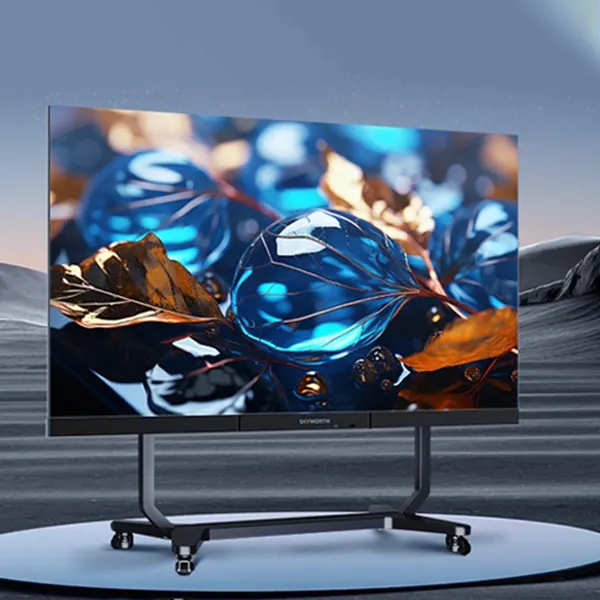
Close-up viewing in low light demands both spatial and temporal light consistency. The monolithic structure of chip on board ensures seamless luminance gradient smoothing, meaning no abrupt hot spots or dark patches disrupt visual continuity. Simultaneously, advanced driver units deliver ultra-low flicker output measured well below perceptible thresholds. Together, these features eliminate the physiological stressors that trigger headaches and fatigue during prolonged interaction. The visual system remains relaxed and focused, supporting extended use in command centers, medical imaging suites, and creative workspaces where precision and comfort are inseparable.
Frequently Asked Questions
-
What does chip on board technology stand for, and how is it different from surface-mounted technology?
Chip on board stands for integrated chip-on-board technology, which bonds diode chips directly onto a substrate to form a continuous, monolithic light-emitting surface. Unlike surface-mounted device displays, it eliminates physical gaps between pixels to provide uniform light without hotspots.
-
Why is chip on board technology superior for low-light environments?
It offers deep black levels, eliminates internal reflections, and prevents light scatter, ensuring sharper visuals and exceptionally high contrast ratios even in dim settings.
-
How does chip on board design reduce eye fatigue?
Chip on board displays feature matte black surface treatments that suppress specular glare. This minimizes high-contrast visual noise, reducing cognitive load and supporting prolonged viewing comfort.
-
Does chip on board technology enhance color uniformity?
Yes, direct chip-to-substrate optical bonding and calibrated phosphor coatings ensure stable color accuracy across wide viewing angles, outperforming traditional panel designs in low-light environments.