
 EN
EN
 CH
CH FR
FR ES
ES AR
AR FA
FA AZ
AZ JA
JA KO
KO TL
TL ID
ID VI
VI TH
TH TR
TR BN
BN LO
LO MN
MN MY
MY KK
KK UZ
UZ KY
KY DE
DE IT
IT PT
PT RU
RU BG
BG HR
HR CS
CS DA
DA NL
NL PL
PL CA
CA SR
SR SQ
SQ HU
HU GA
GA CY
CY IS
IS EU
EU LA
LA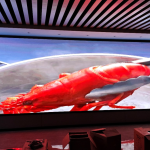
Superior Visual Performance for Concert LED Walls
Delivering an unforgettable live concert experience hinges on an LED wall ability to present crisp, vibrant visuals under demanding stage conditions. The interplay of brightness, pixel pitch, and resolution directly determines how well the display engages both the live audience and broadcast viewers.
Nits Requirements for Indoor Visibility and Outdoor Glare Control
Brightness measured in nits is the first critical factor. Indoor concert venues typically require 800 to 1,500 nits to cut through dim stage lighting without overwhelming performers, while outdoor festivals or daytime events demand 5,000 to 10,000 nits to remain visible in direct sunlight and prevent washed-out imagery. A contrast ratio of at least 5000 to 1 ensures deep blacks and brilliant whites, preserving detail across lighting conditions. Modern LED walls incorporate automatic brightness adjustment to adapt dynamically to ambient light, balancing glare control, energy efficiency, and visual fidelity during transitions from dark theaters to open-air arenas. High-nit displays also integrate seamlessly with pyrotechnics and moving lights, ensuring the video backdrop consistently competes with stage luminaires.
Pixel Pitch Selection Guide for Concert LED Wall Layouts
Pixel pitch defines the distance between adjacent LED clusters and determines the minimum viewing distance for a seamless image. Industry best practices recommend selecting pitch based on the closest audience position, ideally no more than one thousandth of that distance.
| Viewing Distance Range | Typical Concert Venue Type | Recommended Pixel Pitch | Primary LED Wall Role |
| Under 3 meters | Small indoor clubs and VIP areas | 2.0 to 2.5 mm | Main stage backdrop and close-up side screens |
| 3 to 10 meters | Theaters and mid-size halls | 2.5 to 4.0 mm | Main stage backdrop and IMAG screens |
| Over 10 meters | Arenas, stadiums, and outdoor festivals | 4.0 to 10.0 mm | Main stage, large IMAG screens, and outfield displays |
Finer pitches support near 4K clarity for close-range audiences, while coarser pitches offer cost-effective performance where viewers are distant. Side or relay screens often use 4 to 6 mm panels, striking a balance between resolution and budget. Modular designs even allow mixed-pitch configurations across a single wall, optimizing visual fidelity for varied seating zones without compromising structural integrity or uniformity.
Resolution Planning for Dynamic Content Immersion and Broadcast Readiness
Resolution emerges from the combination of pixel pitch and physical screen size, and it must align precisely with intended use. For live broadcast and image magnification feeds, a minimum native 1080p output is essential to avoid compression artifacts and camera capture issues. VIP or front-row immersion demands higher density, often achieved with sub 2.5 mm pitch, to render 4K content without visible pixel structure. Dynamic content including motion graphics, real-time camera feeds, and social media integrations requires high refresh rates and proper aspect ratio alignment. While 16 by 9 remains the broadcast standard, custom-shaped LED walls rely on media server-based content mapping to ensure distortion-free scaling. By anchoring resolution planning to final output requirements rather than just screen dimensions, the system delivers consistent, broadcast-ready visuals across all viewing contexts.
Modular LED Wall Design for Complex Concert Staging
Modern concert staging demands displays that transcend flat rectangles. Modular LED walls can be assembled into curved, angled, and asymmetric forms, transforming the stage into a dynamic architectural canvas.
Curved Angled and Asymmetric LED Wall Configurations
Panels lock together seamlessly to form concave or convex arcs that wrap around performers, creating panoramic backdrops that deepen audience immersion. Faceted angles catch light from multiple directions, while off-axis joints enable sharp, three-dimensional geometries that integrate cleanly with custom set pieces, bridges, and suspended structures. Each lightweight, independently addressable panel supports precise curvature control, preventing pixel distortion and maintaining uniform brightness across complex surfaces. The result is a fluid, responsive environment that intensifies emotional impact without sacrificing technical consistency.
Rigging Ready Modularity and Load Distributed Mounting
Tour schedules demand speed, safety, and flexibility. Rigging-ready modular panels feature integrated locking pins and alignment guides, enabling crews to assemble or reconfigure sections in minutes. Structural frames distribute weight evenly across multiple hang points, reducing stress on truss and rigging hardware. Cabinet engineering accommodates wind load, vibration, and movement during performance, with certified load ratings up to 500 kilograms per square meter for secure suspension at any height. This modularity supports rapid adaptation between venues, as panels can be added, removed, or reoriented without altering the mounting infrastructure. Whether hung, stacked, or flown, the system delivers robust, repeatable performance night after night across global arena tours.
Live Event Reliability High Refresh Rate and IP Protection
The reliability of a concert LED wall hinges on technical specifications engineered for zero-failure operation during live shows. Two foundational elements are high refresh rates for artifact-free camera capture and rugged, serviceable designs for rapid maintenance.
High Refresh Rate for Flicker Free Live Capture
A refresh rate of 3840Hz or higher eliminates flicker, scan lines, and motion banding when captured by broadcast or image magnification cameras, which is an absolute requirement for professional live production. At this rate, the display refreshes four times faster than standard 60Hz systems, delivering smooth motion during fast-paced performances. Leading manufacturers pair high-speed drivers with advanced grayscale processing to preserve color fidelity and bit depth, ensuring visual jockey content, real-time effects, and camera feeds render flawlessly both in-venue and on-screen.
IP Protected Enclosure and Hot Swap Panel Design
Concert environments expose LED walls to dust, spills, and sudden weather shifts, making IP65-rated enclosures essential. The rating certifies complete dust ingress protection and resistance to low-pressure water jets from any direction. Equally vital is hot-swap panel design, allowing technicians to replace faulty tiles in seconds, whether front or rear accessible, without tools or full system shutdown. If a component issue occurs mid-show, the display remains operational while repairs happen during set changes. This level of serviceability minimizes downtime and maximizes uptime, which is critical for multi-night tours and back-to-back festival dates.
Frequently Asked Questions
-
What is the ideal brightness in nits for an indoor concert LED wall?
Indoor venues typically require 800 to 1,500 nits to combat dim stage lighting without overwhelming performers.
-
How does pixel pitch impact the viewing experience?
Pixel pitch determines the minimum viewing distance for a seamless image. A smaller pitch results in greater clarity for close-range audiences.
-
What resolution is essential for broadcasting live events?
A minimum native 1080p resolution is necessary to prevent compression artifacts during broadcasts.
-
How are LED walls adapted for different stage designs?
Modular designs allow for curved, angled, and asymmetric configurations, providing diverse possibilities for creative staging.
-
What features ensure reliability during live performances?
High refresh rates of 3840Hz or above, IP65 protection, and hot-swap panel designs ensure uninterrupted functionality during concerts.