
 EN
EN
 CH
CH FR
FR ES
ES AR
AR FA
FA AZ
AZ JA
JA KO
KO TL
TL ID
ID VI
VI TH
TH TR
TR BN
BN LO
LO MN
MN MY
MY KK
KK UZ
UZ KY
KY DE
DE IT
IT PT
PT RU
RU BG
BG HR
HR CS
CS DA
DA NL
NL PL
PL CA
CA SR
SR SQ
SQ HU
HU GA
GA CY
CY IS
IS EU
EU LA
LA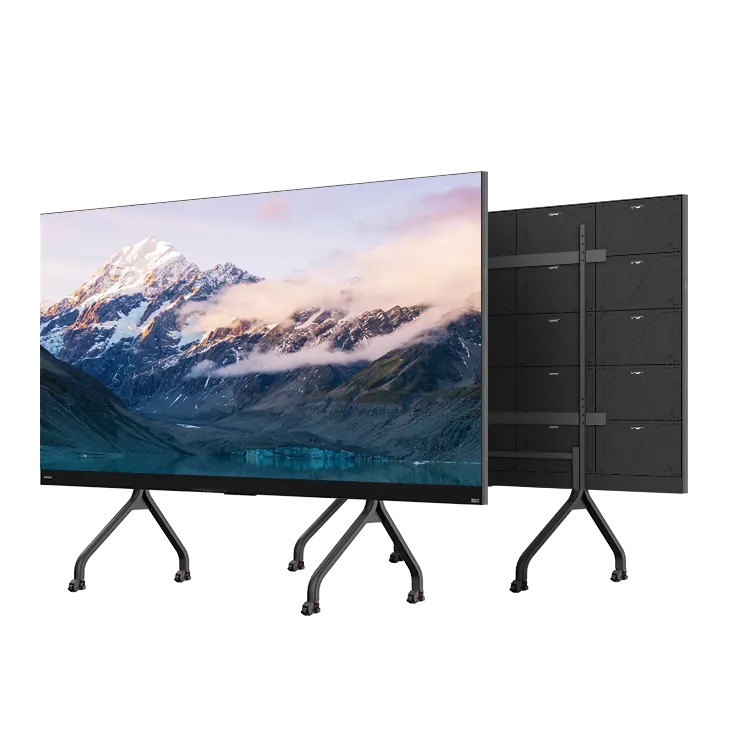
Why Maintainability Decides Total Cost of Large Displays
A large display earns its keep only when it stays lit. A 100 m² video wall in a transit hub or control room does not fail gently — a single dead pixel cluster draws the eye and, over a season, a slow luminance drift across cabinets erodes the picture. The difference between a minor service call and a full-panel teardown comes down to how the led module was designed for service from the start.
In one transit control room supplied ahead of a major Games, a wall ran 20 hours a day. Early on, a cabinet developed a row of dimmed pixels. Because the original spec had called for rear-access only, the team had to shut the adjacent corridor and pull the wall from its mount — a full morning lost, plus a contractor. On the next refresh, the same operator specified front-service, hot-swappable modules with on-module calibration. When a unit failed six months later, a single technician swapped it from the front in under ten minutes during a live shift, and the replacement matched the wall on first power-up. The change did not make faults disappear; it made them cheap and quiet.
Front Maintenance Removes the Rear-Access Burden
The first thing a serviceable led module needs is front access. Skyworth's COB and SMD cabinets use magnetic or screw-fastened front-service attachment, so a technician reaches the failing unit from the viewing side. There is no need to pull the wall away from the wall or dismantle rear cabling. In a corridor where the display sits flush against structure, rear access is simply impossible; front maintenance turns a two-person, half-day job into a ten-minute exchange.
Hot-Swappable Modules Cut Downtime on the Floor
Hot-swappable construction lets a replacement happen without killing power to the whole wall. The replacement led module mates to the cabinet's data and power headers, and the system re-syncs once seated. For a retail floor or broadcast environment, that means the surrounding content keeps playing while one unit is changed. Downtime is measured in minutes, not in a closed venue for the day.
Field-Exchangeable Design Lowers MTTR
Field-exchangeable units are built to be swapped where they stand, with no factory return required for routine faults. MTTR — mean time to repair — drops because the failing part leaves and a known-good part takes its place. Skyworth ships the YXH, SCB, KC and YMU series with standardized module footprints, so one spare type covers many cabinets. A site manager carries a small kit instead of a warehouse.
How Skyworth Structures Service Into the Cabinet
Maintainability is not a single feature; it is a stack of decisions inside each cabinet. The goal is to isolate a fault to the smallest replaceable item and to make that item easy to reach, identify, and swap.
Receiving Card and Power Supply Are Isolated
Inside the cabinet, the receiving card and the power supply sit on separate, serviceable planes. A flicker caused by a receiving card fault is fixed by exchanging that card, not the whole led module bank. Power supplies are mounted for tool-free extraction. This separation follows the serviceability logic behind IEC 62368-1, which treats accessible, replaceable energized parts as a safety and maintenance requirement rather than a hazard to seal away.
Spare Module Strategy Keeps a Wall Running
A spare module program is the most practical insurance a large display owner buys. Rather than stocking entire cabinets, the buyer keeps a small count of bare modules matched to the installed pixel pitch and batch. Skyworth's modular architecture means a spare module drops into the exact slot. The advice for procurement is simple: size the spare pool to the wall's criticality — a control room earns a deeper bench than a lobby wall.
Calibration Retention Survives a Swap
Calibration is where many walls go wrong after service. Skyworth stores per-module calibration coefficients on the module or in the system, so a replacement led module inherits the wall's brightness and color curve instead of standing out as a patch. Without retention, every swap triggers a full re-calibration session across the wall. With it, the new unit blends on first power-up.
Tool-Free Service Protects the Investment
The longest-lived walls are the ones crews actually service, and crews service what they can reach without a toolbox of specialty bits.
Tool-free does not mean flimsy. The fasteners are sized for repeat insertion, and the magnetic seat holds the replacement led module square against the cabinet without shims. The point is repeatability: a wall serviced ten times should look as tight as on day one. Specifiers should ask to see a live swap during a factory visit, not just a brochure claim.
Redundancy Planning for Control Rooms
Control-room buyers should plan redundancy at the signal level, not just the panel. A redundant power feed and a backup receiving path let a single led module fault stay invisible to the operator. Skyworth's video walls scale past 100 m² and run in environments from −30 to +60 °C, so the service plan must assume field conditions, not lab ones. Redundancy turns an incident into a scheduled swap.
Inspection and Spare-Part Advice for Buyers
Before signing, inspectors should confirm front-service access, count fasteners per module, and verify the spare-supply path with the supplier. Ask for the calibration-retention method in writing and confirm the receiving card is field-replaceable. At use, log each swap with its slot position and date; that log predicts which cabinet ages first. Good maintainability is a habit built on a clear record, not a one-time feature.
A large display is a long-term asset, and the led module is the unit that decides whether service stays cheap or becomes a teardown. Front maintenance, hot-swappable exchange, field-replaceable cards, and calibration retention together compress MTTR and protect uptime. Specifiers who weigh these traits at purchase avoid the hidden cost of walls that look fine but cannot be serviced.
Frequently Asked Questions
Question: What makes a large display serviceable from the front?
Answer: A front-service design lets a technician reach the failing led module from the viewing side, with no rear clearance needed. Magnetic or screw-fastened seats hold the unit square against the cabinet. That removes the need to pull the wall from its mount or shut a corridor. In tight spaces, front access is the only practical path to fast, quiet service.
Question: Why does calibration retention matter after a module swap?
Answer: Without retention, a fresh unit shows a visible brightness or color step against its neighbors, forcing a full-wall re-calibration. Stored per-module coefficients let the replacement inherit the wall's curve on first power-up. The picture stays uniform with no extra session. For a control room or broadcast wall, that consistency protects readability and keeps the display looking intentional rather than patched.
Question: How should a buyer size a spare module pool?
Answer: Match spares to the installed pixel pitch and batch, not to whole cabinets. A lobby wall may need only a couple of units; a 24/7 control room earns a deeper bench. Keep bare modules in a climate-stable store and log each swap. The aim is to cover the most likely fault without warehousing a second wall. Tie the pool to the wall's criticality.
Question: When is hot-swappable exchange most valuable?
Answer: Hot-swappable exchange pays off wherever downtime carries a cost. A retail floor loses sales when dark; a transit hub confuses passengers; a broadcast set cannot pause. Swapping a unit without killing the whole wall keeps surrounding content live. The value is measured in avoided closures and quiet fixes during operating hours, not in the swap itself.
Question: Which cabinets suit a control-room redundancy plan?
Answer: Cabinets with isolated receiving cards, tool-free power supplies, and signal-level backup suit a control room. A redundant feed and backup receiving path keep a single fault invisible to operators. Size the wall for field conditions from −30 to +60 °C, and confirm the supplier supports the spare path. Redundancy plus fast swap turns an incident into a scheduled, low-risk job.