
 EN
EN
 CH
CH FR
FR ES
ES AR
AR FA
FA AZ
AZ JA
JA KO
KO TL
TL ID
ID VI
VI TH
TH TR
TR BN
BN LO
LO MN
MN MY
MY KK
KK UZ
UZ KY
KY DE
DE IT
IT PT
PT RU
RU BG
BG HR
HR CS
CS DA
DA NL
NL PL
PL CA
CA SR
SR SQ
SQ HU
HU GA
GA CY
CY IS
IS EU
EU LA
LA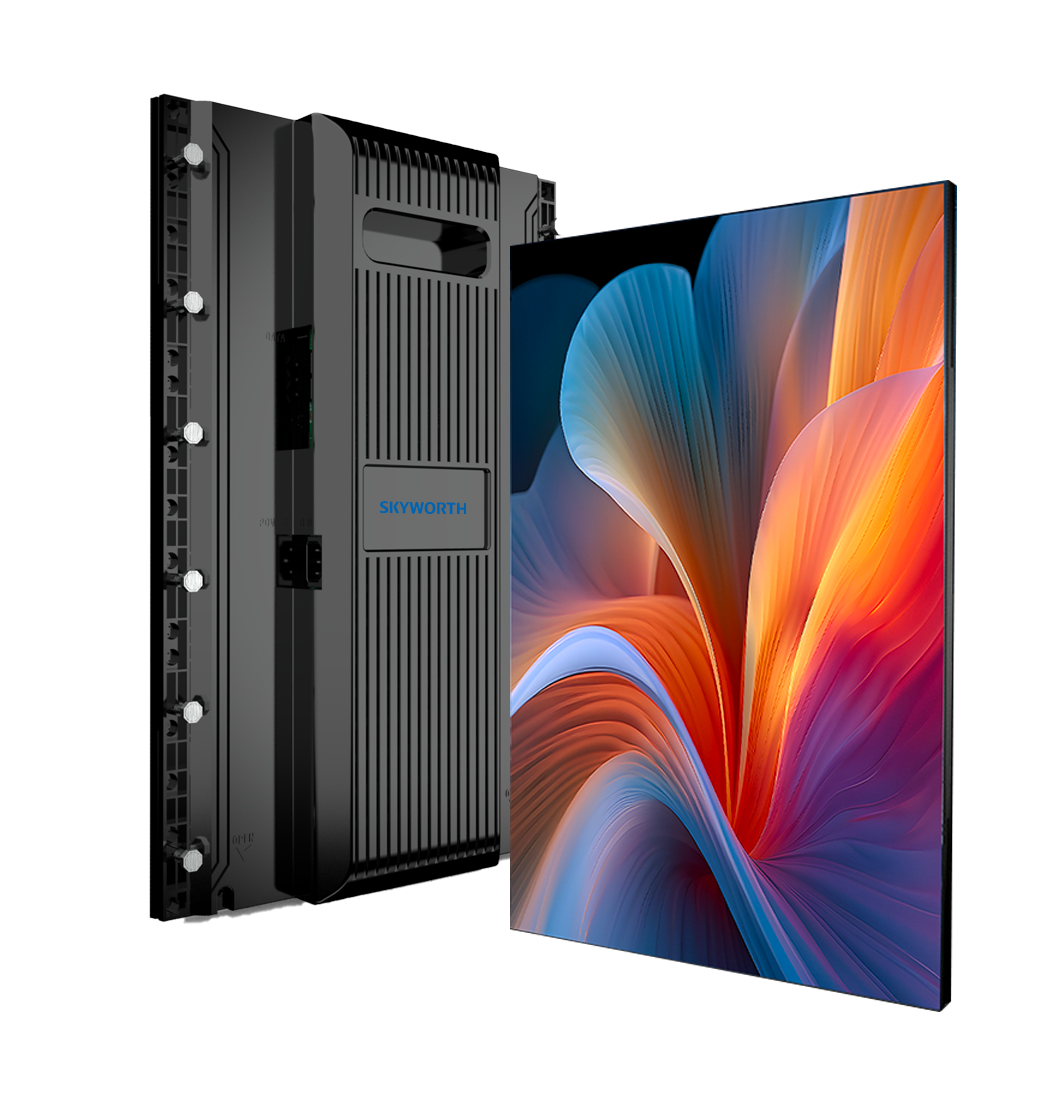
A high-end LED wall in a luxury hotel lobby does more than display a logo—it sets the tone the moment a guest steps inside. For hospitality specifiers, contrast ratio and black level decide whether an installation looks premium or merely bright. Skyworth Commercial Display, drawing on 37 years of TV display heritage across 120 countries, builds fine-pitch COB displays that hold deep blacks even under warm, layered lobby lighting.
Why Contrast Ratio Defines the Luxury Hospitality Impression
Black Level and Ambient Light in Lobbies
Luxury hotels rarely run a dark room. Lobbies mix daylight, chandeliers, and feature lighting, so a display's black level is tested constantly. When a panel cannot reach a true black, the image floats on a grey haze and the brand loses its sense of depth. The first requirement for any hospitality LED wall is therefore a low ambient reflectance and a screen surface that does not bounce light back into the room.
How COB Delivers a Smooth Deep-Black Surface
COB, or chip-on-board, mounts LED chips directly onto the PCB with no wire bonds. The result is a flat, uniform face that scatters far less light than discrete SMD packages. Because the chips sit closer to the board, thermal management improves and long-term luminance decay slows, protecting black-level consistency for years. COB also offers roughly 40% higher impact resistance than standard SMD, a practical advantage in busy hotel circulation areas. With pixel pitches under 0.9 mm achievable, the surface reads as a single smooth plane. A COB led wall therefore keeps a dark scene dark instead of breaking into a grid of faint points—a detail guests notice subconsciously in a ballroom.
Full-Black Calibration for Seamless Tiling
A tiled led wall is only as black as its weakest cabinet. Skyworth calibrates each module for uniform grayscale and brightness so that when cabinets tile into a 4K surface, the seams disappear. Full-black calibration means the display is set to its lowest light output and every region matched, removing the patchwork glow that low-cost installations show after a few months of use. Skipping this step is a common risk: an uncalibrated wall develops visible bright borders where cabinets meet, which reads as a defect under a hotel's careful lighting design.
How Skyworth Engineers Contrast for Ballrooms
Grayscale and Brightness Measured in Nits
Contrast is the ratio between the brightest white and the darkest black a panel can show. In a ballroom, the led wall may reach thousands of nits for stage content, yet the same screen must drop to a near-zero black during a presentation. Fine grayscale control lets the processor hold 16-bit steps, so gradients in a night-sky scene remain smooth rather than banding into visible steps. The video processor and content management system must work together here; a weak signal chain clips shadows and flattens the very depth that justifies a premium installation.
Bezel-Free Construction for Visual Ambience
Traditional video walls show bezels that cut the image. A bezel-free led wall keeps the visual ambience unbroken across the entire plane. For a luxury hotel this matters in ballrooms and arrival lobbies where the screen is part of the architecture, not a monitor on a stand. Skyworth's seamless tiling scales from a single cabinet to more than 100 m² without fracturing the picture, and front-access modules mean a damaged unit can be exchanged without dismantling the surrounding wall.
Ambient-Light Adaptation Across the Day
Morning lobbies are bright; evening receptions are dim. The led wall needs to track ambient light and adjust brightness and black level so contrast stays comfortable for the eye. Intelligent content management can schedule different calibration profiles by hour, keeping the visual ambience consistent from check-in to late-night lounge. Leaving a single static profile is a frequent mistake; a screen tuned for midday then looks washed out at dinner, and the contrast that sold the project quietly disappears. A scheduled calibration routine, stored as named presets, keeps the visual ambience intentional rather than accidental.
Procurement, Compliance, and Field Service
IEC 62368-1, CE, and Safe Installation
For European and international projects, safety and compliance are non-negotiable. Skyworth products are built to IEC 62368-1 for display safety and carry CE marking for the EU market, alongside RoHS for material restrictions. Specifiers should confirm these certificates in the tender and verify that installers follow local electrical codes during mounting and cabling. Beyond safety, electromagnetic compatibility under EN 55032 and CISPR 32 keeps the display from interfering with nearby meeting-room microphones and control systems, while ANSI/AVIXA guidance helps size the wall to the viewing distance. These references do not change black level, yet they protect the guest experience and simplify sign-off.
Inspection and Maintenance for Long-Term Black Levels
A display's contrast is not fixed at factory; it drifts with heat and dust. Request a field calibration plan, front-access maintenance, and a spare-module strategy so a single failed unit never leaves a bright patch on a black field. Regular grayscale checks keep the deep-black performance that originally justified the investment. A hot-swappable power supply and matched spare cabinets reduce downtime during peak season, when a dark lobby wall left unrepaired quietly undermines the property's premium promise. Documenting each calibration baseline lets a new operator reproduce the original look without guesswork, preserving the black-field quality the property paid for and easing long-term asset management.
Summary
Choosing the right contrast ratio is less about a single number and more about how the LED wall behaves under real hotel light, day after day. Skyworth's COB surface, full-black calibration, and certified build give hospitality teams a display that stays quietly premium in lobbies and ballrooms. The result is ambience guests feel before they can name it.
Frequently Asked Questions
Question
What contrast ratio should a luxury hotel target for a lobby display?
Answer: A luxury hotel lobby benefits from a display that reaches a true black rather than chasing a headline ratio. Look for low black-level output, 16-bit grayscale, and calibrated uniformity across cabinets. The goal is image depth under mixed lighting, not a spec-sheet maximum. Evaluate the screen in the actual room, at the actual ambient light, before committing to a model.
Question
Why does COB help with black level compared with SMD?
Answer: COB mounts chips directly on the board and covers them with a flat encapsulant, removing the gaps and raised lenses of SMD packages. That smooth surface reflects far less stray light, so dark scenes stay dark. With sub-0.9 mm pixel pitch possible, the image reads as one plane. For hospitality spaces, the calmer black field supports a more refined, less technical visual mood.
Question
How is a seamless wall calibrated for a full-black field?
Answer: Calibration starts at the module level, measuring each unit's brightness and grayscale at low output. Technicians then match cabinets so the tiled surface shows no seam or patch. A full-black profile sets the screen to minimum light and balances every region. Re-running this check quarterly preserves depth as components age and accumulate dust.
Question
Which certifications matter for hotel installations in the EU?
Answer: For EU hospitality projects, IEC 62368-1 covers display safety while CE confirms conformity with applicable directives, and RoHS limits hazardous substances. Procurement teams should request valid certificates and confirm installer compliance with local electrical codes. These marks do not raise contrast, but they protect guests and staff and keep the project insurable and audit-ready.
Question
Can ambient light control improve perceived contrast in a ballroom?
Answer: Yes. A ballroom changes from bright rehearsal light to dim event mood, and the screen should follow. Scheduling brightness and black-level profiles by hour keeps the image comfortable and the contrast believable. Pair this with a professionally calibrated LED wall and the display holds its premium look whether guests see it at noon or midnight.